
Weekly eNews

Dr Ray Swann
Deputy Headmaster, Head of the Crowther CentreAt Crowther, our Effective Learner Model helps us make sense of the complexity of learning by giving students clear, shared ways of thinking about how they learn. A key part of this is supporting productive struggle -those moments when learning feels challenging, effortful, and worthwhile. Rather than avoiding difficulty, we want students to stay engaged, regulate themselves, and persist.
Well‑established classroom routines play an important role here, particularly within the learning process and learning dispositions elements of the model, by giving students something steady to lean on when the thinking gets hard.
Simple routines such as brain, book, buddy provide a practical process students can follow when they feel stuck. They are taught explicitly and used consistently so that, over time, they become automatic. This frees up cognitive space and reduces uncertainty, allowing students to focus their energy on the learning itself rather than on what to do next.
In this way, routines don’t remove challenge-they help students manage it. They build independence, confidence, and self‑regulation, all of which are essential for developing capable, resilient learners who know how to respond when learning requires real effort.
Dr Ray Swann
Deputy Headmaster / Head of the Crowther Centre
The Power of Routines
In Junior School, routines are especially powerful because young learners thrive on predictability and structure. When the flow of the day is clear and consistent, students feel safe, settled, and ready to learn.
This sense of security lowers cognitive load, allowing them to direct more attention toward the thinking and problem‑solving required in lessons. Reliable routines act as anchors by helping children transition smoothly between activities, reducing anxiety, and creating an environment where the brain is primed for engagement.
Routines also play a critical role in building foundational focus skills. Our students are learning to develop their executive functioning skills like attention, working memory, and self‑control.
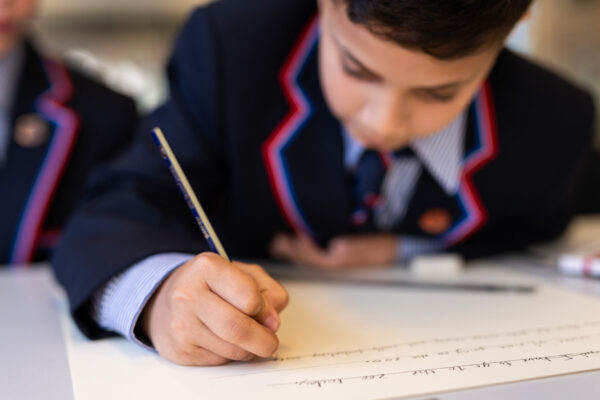
When classroom expectations and processes remain steady, mental effort is reduced thus allowing more capacity for sustained concentration on the task at hand. Over time, this repeated practice strengthens their ability to stay present, avoid distractions, and return to the learning when attention lapses. These are capabilities that become increasingly important as learning becomes more complex.
Finally, well‑designed routines support equity in learning. Clear, consistent processes ensure all students know how to participate and what success looks like. This empowers every child to access learning, contribute confidently, and take ownership of their progress.
When routines and focus habits are embedded early, students develop the independence and self‑efficacy that underpin the Effective Learner Model. They learn not only what to do but how to navigate learning challenges with agency and resilience.
Rebecca Taylor
Head of Teaching and Learning, Junior School
Having Positive Conversations
For Year 8 parents and boys.
Year 8 is such an exciting time for boys as they experience significant physical, social and emotional changes. At the same time, many boys start to push boundaries and assert themselves in the adult world.
They want to be more independent, and you may feel your son pulling away from the family unit as their peer relationships become increasingly influential. All this is perfectly normal and an essential part of growing up, but it can also be a source of conflict for families.

Maintaining positive relationships with your child at this time is essential. Keeping the lines of communication open helps reduce conflict and fosters wellbeing and engagement in schooling.
Communication skills can be taught and need to be modelled by adults.
On Wednesday 11 March, we are running a workshop for Year 8 parents and their boys where we will share adolescent development research and discuss common challenges when communicating.
You will leave with some practical strategies for having positive conversations. We look forward to seeing you then.
Kristen Molloy
Associate Head of the Crowther Centre, Literacy and Engagement
Head of Parent Programs